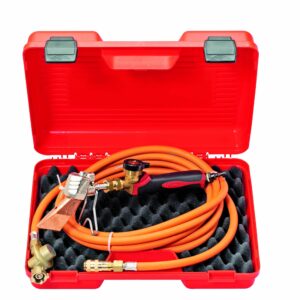
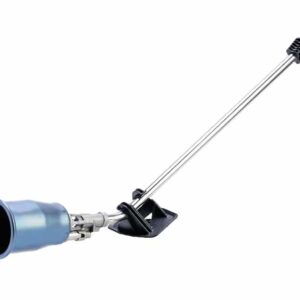
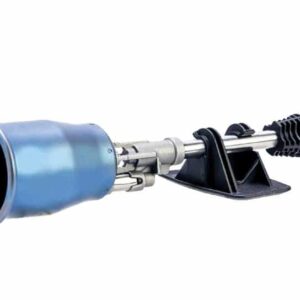


A heat gun is the ideal tool if you need to remove PVC floor tiles or wall coverings when renovating a building, In this short tutorial we will explain how to proceed.
 The nozzle of the heat gun must be chosen according to your task:
Preparing the work site and the tools to be used
In addition to your heat gun (and the appropriate nozzles), you must use other tools, as well as protect for yourself. Goggles are needed, and gloves suitable for heat, such as thick garden gloves (avoid using melting materials such as plastic household gloves) and a face shield to protect you from both the emanations of the PCV, and possible splashes. You should work in a ventilated area, as PVC in direct contact with heat produces vapours that it is advisable to avoid breathing. As regards equipment, a tool to use as a lever on your PVC floor tiles should be used. A painting knife will be useful to scrape your walls (and all flat surfaces), as well as to remove the adhesive residues left by the PVC floor tiles. Use a triangular scraper to reach corners and angles with furniture. When scraping a wall, place a tarpaulin on the floor so that you can easily collect any residue that falls off. When removing PVC floor tiles, you may have to deal with glue residues that will remain on the floor. Use acetone to get rid of it. If you are using large amounts of glue, soak paper towels with acetone and leave for a minute or two before scraping with your painting knife.The nozzles of the thermal stripper
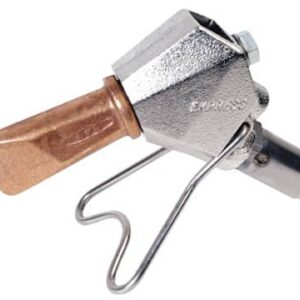
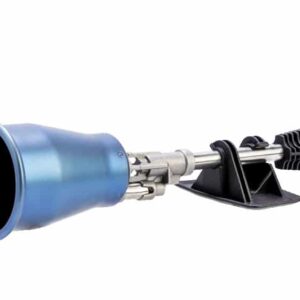
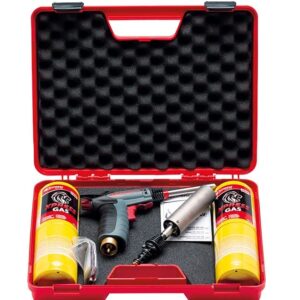
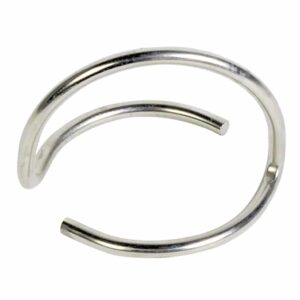
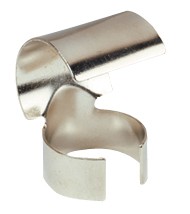
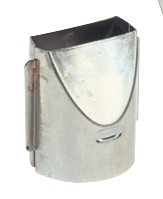
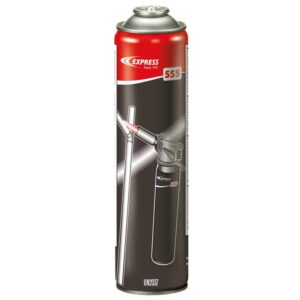
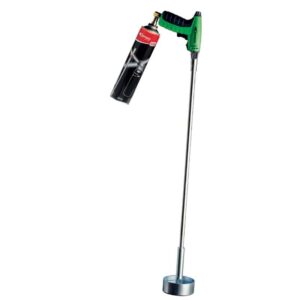
The different nozzles equipping the autonomous hot air gun Ref. 4600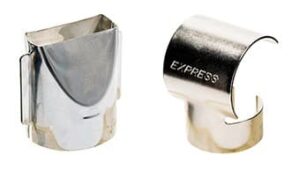 The nozzle of the heat gun must be chosen according to your task:
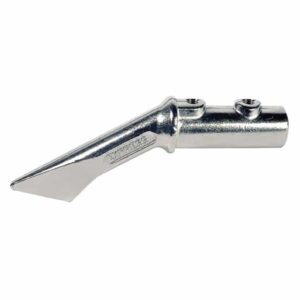
- the nozzle with an integrated blade strips at the same time as you scrape, which allows you to treat large flat surfaces;
- the cone-shaped nozzle allows you to direct the hot air to a specific point;
- the flattened nozzle spreads the heat over a larger area.